

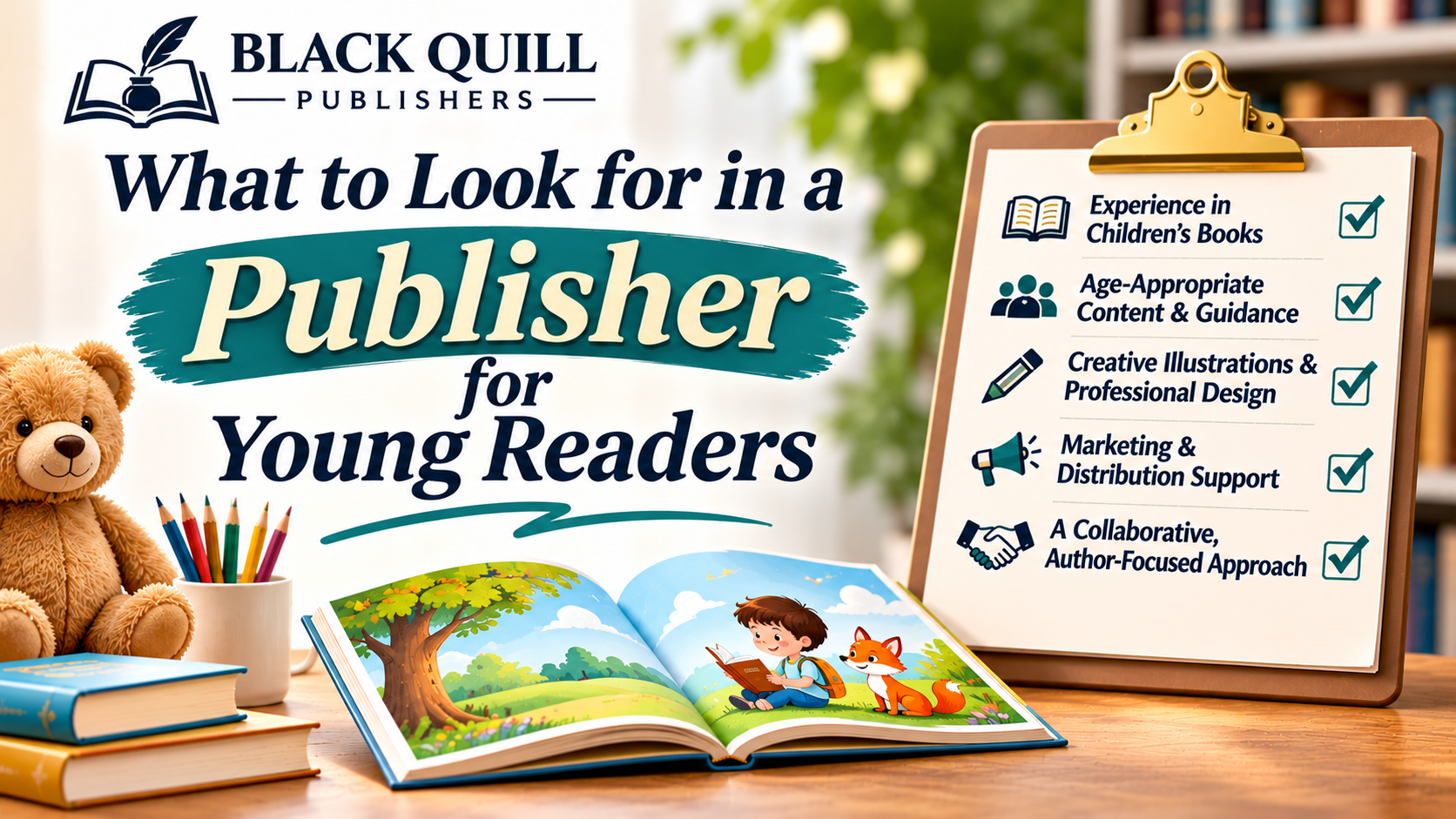
What to Look for in a Publisher for Young Readers
over and over again. When creating a story for young readers, the selection of children's book publishers is one of the most critical that you can make.
Kids' publishing is a world apart. It's not adult publishing, different rules and expectations, different audiences.
Learn What Your Age Classification Is
Children's books are organised by age and each age level has some conventions of its own. Board books are ideal for babies and toddlers and have very little text. Picture books typically are geared towards the 3 to 8-year-old age group, and they tend to depend on great pictures. Early readers assist children to become readers. The story is longer and more complex in middle grade or in young adult novels.
In your manuscript, you'll find good publishers who know these categories and will let you know where it fits. The length of the word count, the vocabulary used, and the page count are more important for many new authors than they think.
A Picture Is Worth a Thousand Words
Art and text collaborate in picture books particularly. The best publishers have illustrators and designers who have an experience working with pacing a story from page to page. Inquire if the publisher can pair you up with an illustrator, if you can contribute to the illustration and how it will be treated in the contract.
Print quality is not to be overlooked. Children throw books, break them or pull them. It makes a difference when it's a sturdy paper, bright color printing and a durable binding.
A Young Readers' Edition of the Book
It's easy to look at writing for children, but it's hard to do. Every word counts. An experienced editor will review tone, readability and age appropriateness. They also consider themes as they ensure that the message doesn't sound preachy.
Try to find a publisher that employs professional editing, rather than an optional extra.
Distribution and Reach
The best book is no good if families, schools, and libraries don't find it. Inquire how the publisher distributes books. Is there a way to access books via online vendors, bookstores, and library vendors? Are they able to make a school visit or reading event?
Questions Worth Asking
Be sure to ask some straight questions before you make a commitment. How long does it take from submitting to releasing? Who is the author of the text and the illustrations? What are the conditions of the royalties? Are there any marketing services included?
Good sign if there is a clear answer. Vague ones are not.
Final Thoughts
The top publishers in this field have a passion for children's books. It's often apparent in their verbal style of talking about stories, readers, and the craft. This enthusiasm can be seen in the finished book.
Doing your homework is worthwhile. The right choice brings your story to life, adds artwork and ensures it's reaching the widest possible audience.over and over again. When creating a story for young readers, the selection of children's book publishers is one of the most critical that you can make.
Kids' publishing is a world apart. It's not adult publishing, different rules and expectations, different audiences.
Learn What Your Age Classification Is
Children's books are organised by age and each age level has some conventions of its own. Board books are ideal for babies and toddlers and have very little text. Picture books typically are geared towards the 3 to 8-year-old age group, and they tend to depend on great pictures. Early readers assist children to become readers. The story is longer and more complex in middle grade or in young adult novels.
In your manuscript, you'll find good publishers who know these categories and will let you know where it fits. The length of the word count, the vocabulary used, and the page count are more important for many new authors than they think.
A Picture Is Worth a Thousand Words
Art and text collaborate in picture books particularly. The best publishers have illustrators and designers who have an experience working with pacing a story from page to page. Inquire if the publisher can pair you up with an illustrator, if you can contribute to the illustration and how it will be treated in the contract.
Print quality is not to be overlooked. Children throw books, break them or pull them. It makes a difference when it's a sturdy paper, bright color printing and a durable binding.
A Young Readers' Edition of the Book
It's easy to look at writing for children, but it's hard to do. Every word counts. An experienced editor will review tone, readability and age appropriateness. They also consider themes as they ensure that the message doesn't sound preachy.
Try to find a publisher that employs professional editing, rather than an optional extra.
Distribution and Reach
The best book is no good if families, schools, and libraries don't find it. Inquire how the publisher distributes books. Is there a way to access books via online vendors, bookstores, and library vendors? Are they able to make a school visit or reading event?
Questions Worth Asking
Be sure to ask some straight questions before you make a commitment. How long does it take from submitting to releasing? Who is the author of the text and the illustrations? What are the conditions of the royalties? Are there any marketing services included?
Good sign if there is a clear answer. Vague ones are not.
Final Thoughts
The top publishers in this field have a passion for children's books. It's often apparent in their verbal style of talking about stories, readers, and the craft. This enthusiasm can be seen in the finished book.
Doing your homework is worthwhile. The right choice brings your story to life, adds artwork and ensures it's reaching the widest possible audience.