

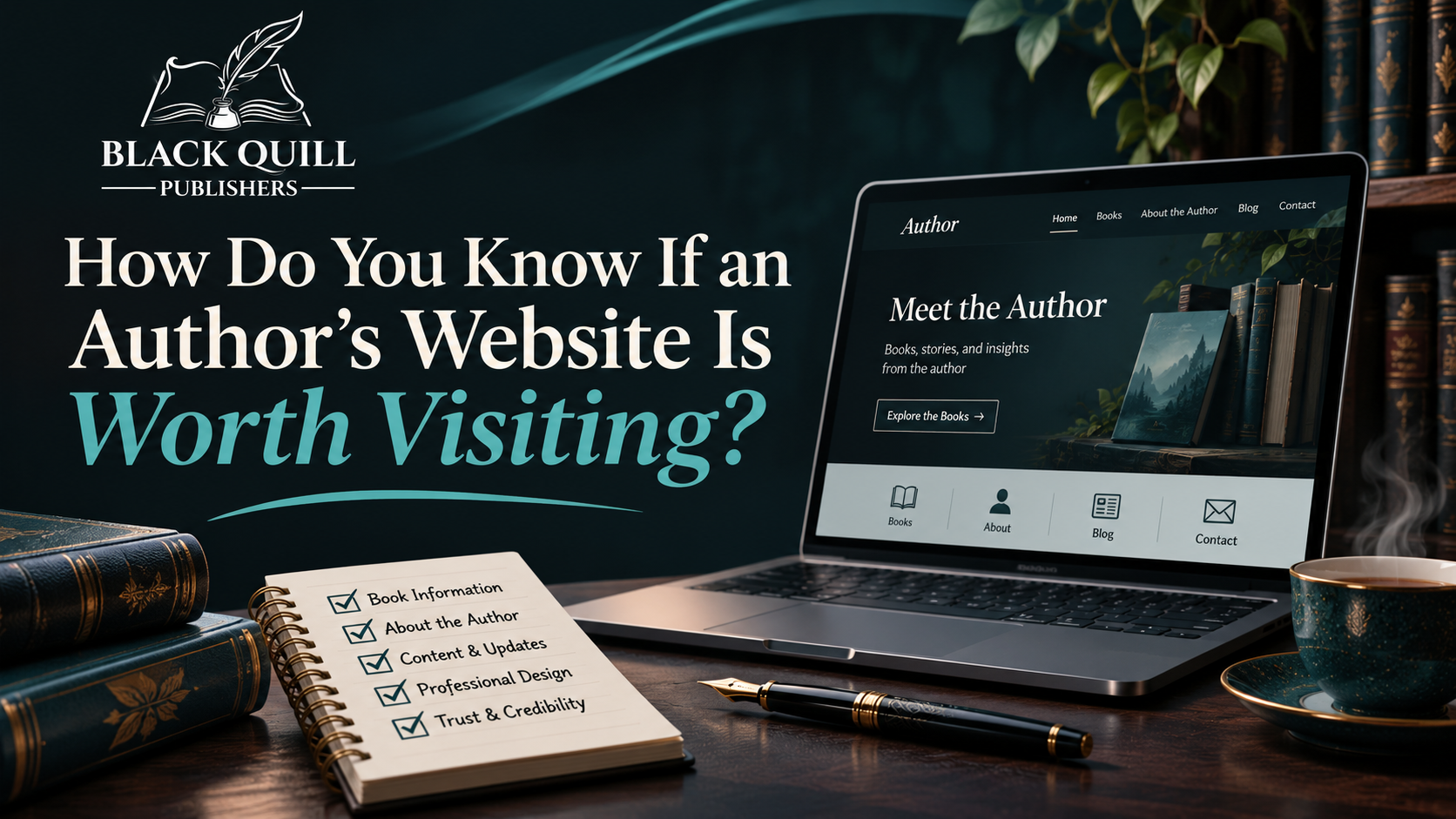
How Do You Know If an Author's Website Is Worth Visiting?
A bookstore reader finds a new book and likes it, and wants to learn about the book's author. Maybe they are hoping to read another book, to learn about what made the book so great, or to find out if there is a sequel in the works. They go onto the web and end up on the author's web page.
The next step is of critical importance. The reader will likely not leave the site if it is easy to navigate the author's work. When it appears to be dated or does not address the fundamental questions, they may just move on.
You don't have to make a fancy or complicated site for your author website in order to make a good impression. It must get the job done properly with a few points: introduce the writer, introduce their books and provide the visitors with a reason to come back.
Your Website Is a Great Resource That Tells Your Readers Where to Look Next
A common error is to use a homepage as a personal scrapbook. Photos, quotes, awards, announcements and book covers vie for the visitor's attention, and it is difficult to know where to start.
It's more effective to determine what your visitors should see first if they are visiting your site for the first time. Most authors will have their name, introduction, and a straight path to their book. The rest will follow.
Here it can be helpful to consult the best author website examples, especially to compare writers working in different genres. A crime fiction writer could have a thriller-related title and a brief summary of the story of the newest thriller. A poet can opt for a more subdued design which allows the writing space to breathe. Neither is necessarily the superior method. The design is successful when it's appropriate to the author's books and to the readers who read those books.
It is important to highlight the books page. Every book needs a separate cover page, book description and easy book-buying links. If you have a series of books, you can add the recommended reading order, so that if they are new readers, they don't have to guess it themselves.
An About page is also essential and doesn't have to include the author's life story. Some information about their interests, influences, or writing process will make the person behind the books more accessible.
It Is a Hard Thing to Achieve Perfection in the Details
Suppose you got to an author's site on your phone in the waiting room at the bus stop. Suppose you were at a bus stop waiting for a bus and you came into an author's website on your phone. You have a book that you want to view the price of, but the text is small, menus are not intuitive, and pages load very slowly. The story is so disappointing even if the author is writing the genre you love.
That is why it is important to give the same consideration to practical matters as you do to visual design. Pages should be fast to load, links should function, and the site should fit nicely on smaller screens. Headings and easy-to-read text also guide visitors to find information easily.
One thing many writers tend to forget is maintaining the website. It's hard to imagine that a book was published two years ago and still mentioned in an announcement, but it's confusing when an event is announced for next month when it has already passed. Purchase links may change, publishers may change, and an author's catalogue can expand.
These can be avoided by a quick review every few months. It is also an opportunity to see if the homepage is still promoting a certain book or if a new book should be given more attention.
Create a Reason for Readers to Return to Your Website
A website cannot be useful just when a new book is published! People who read a novel might want to read a brief note about the inspiration of the novel, an extra scene that was cut from the novel or the new project that the author is working on. Then there are those who would rather be kept up to date about new releases through a newsletter rather than several social media feeds.
This does not demand that it be continually posted. It's better to have an occasional interest item than a blog with articles just for the sake of keeping the site going.
The authors should also consider what they wish to get visitors to do. Some may wish to encourage readers to purchase books or enter into a speaking engagement, workshop or professional writing services. When you know the objective, you can make it easier to determine what you want to include on the site.
Finally, a good author website should reveal the author's personality and not require the reader to struggle to comprehend it. Begin with the basics, be accurate, and enhance the content as the writing career progresses. Don't assume the most sophisticated website is the best. It's one that readers will want to return to again.A bookstore reader finds a new book and likes it, and wants to learn about the book's author. Maybe they are hoping to read another book, to learn about what made the book so great, or to find out if there is a sequel in the works. They go onto the web and end up on the author's web page.
The next step is of critical importance. The reader will likely not leave the site if it is easy to navigate the author's work. When it appears to be dated or does not address the fundamental questions, they may just move on.
You don't have to make a fancy or complicated site for your author website in order to make a good impression. It must get the job done properly with a few points: introduce the writer, introduce their books and provide the visitors with a reason to come back.
Your Website Is a Great Resource That Tells Your Readers Where to Look Next
A common error is to use a homepage as a personal scrapbook. Photos, quotes, awards, announcements and book covers vie for the visitor's attention, and it is difficult to know where to start.
It's more effective to determine what your visitors should see first if they are visiting your site for the first time. Most authors will have their name, introduction, and a straight path to their book. The rest will follow.
Here it can be helpful to consult the best author website examples, especially to compare writers working in different genres. A crime fiction writer could have a thriller-related title and a brief summary of the story of the newest thriller. A poet can opt for a more subdued design which allows the writing space to breathe. Neither is necessarily the superior method. The design is successful when it's appropriate to the author's books and to the readers who read those books.
It is important to highlight the books page. Every book needs a separate cover page, book description and easy book-buying links. If you have a series of books, you can add the recommended reading order, so that if they are new readers, they don't have to guess it themselves.
An About page is also essential and doesn't have to include the author's life story. Some information about their interests, influences, or writing process will make the person behind the books more accessible.
It Is a Hard Thing to Achieve Perfection in the Details
Suppose you got to an author's site on your phone in the waiting room at the bus stop. Suppose you were at a bus stop waiting for a bus and you came into an author's website on your phone. You have a book that you want to view the price of, but the text is small, menus are not intuitive, and pages load very slowly. The story is so disappointing even if the author is writing the genre you love.
That is why it is important to give the same consideration to practical matters as you do to visual design. Pages should be fast to load, links should function, and the site should fit nicely on smaller screens. Headings and easy-to-read text also guide visitors to find information easily.
One thing many writers tend to forget is maintaining the website. It's hard to imagine that a book was published two years ago and still mentioned in an announcement, but it's confusing when an event is announced for next month when it has already passed. Purchase links may change, publishers may change, and an author's catalogue can expand.
These can be avoided by a quick review every few months. It is also an opportunity to see if the homepage is still promoting a certain book or if a new book should be given more attention.
Create a Reason for Readers to Return to Your Website
A website cannot be useful just when a new book is published! People who read a novel might want to read a brief note about the inspiration of the novel, an extra scene that was cut from the novel or the new project that the author is working on. Then there are those who would rather be kept up to date about new releases through a newsletter rather than several social media feeds.
This does not demand that it be continually posted. It's better to have an occasional interest item than a blog with articles just for the sake of keeping the site going.
The authors should also consider what they wish to get visitors to do. Some may wish to encourage readers to purchase books or enter into a speaking engagement, workshop or professional writing services. When you know the objective, you can make it easier to determine what you want to include on the site.
Finally, a good author website should reveal the author's personality and not require the reader to struggle to comprehend it. Begin with the basics, be accurate, and enhance the content as the writing career progresses. Don't assume the most sophisticated website is the best. It's one that readers will want to return to again.